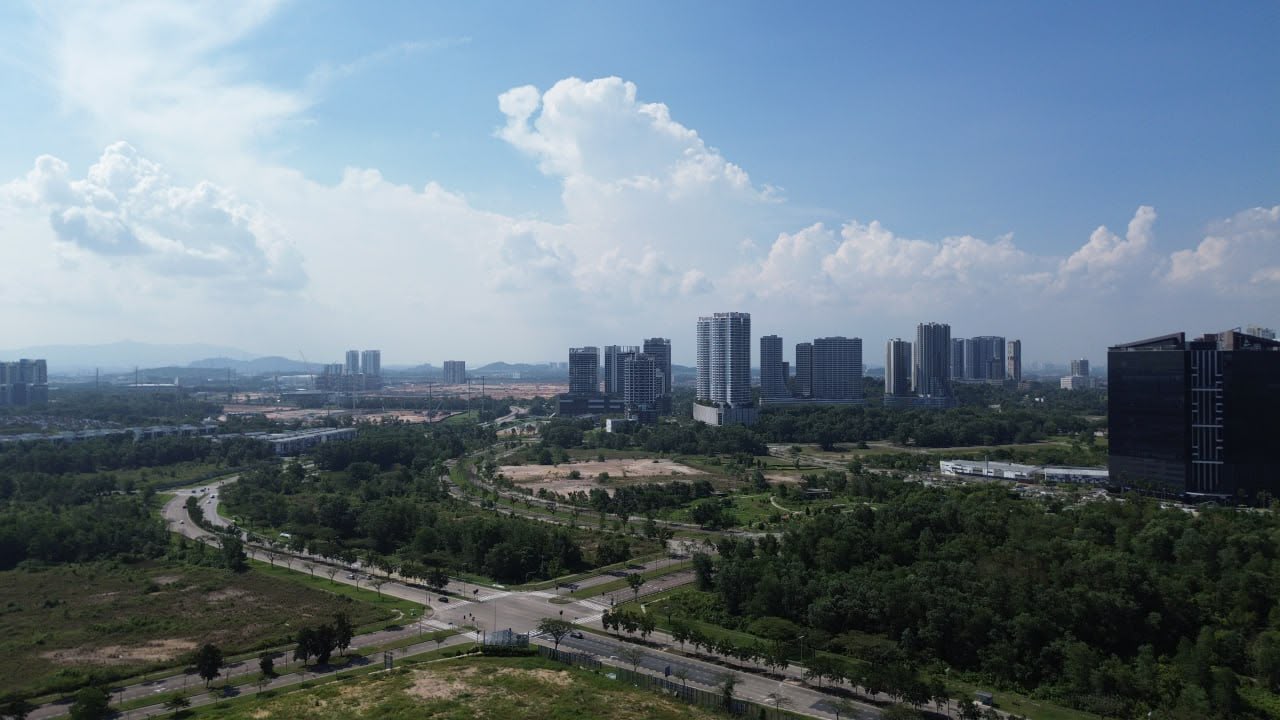

Drive around Medini today and you may notice a strange contrast. There are completed condominiums, international schools, LEGOLAND Malaysia, Mall of Medini and newer residential projects. At the same time, certain buildings look dark, some sites appear unfinished, and large pieces of land are still waiting to be developed.
Does an empty-looking building mean it is abandoned?
No. This is the first distinction buyers should understand. From the road, several very different situations can look the same.
“It looks empty” is a fair observation. “It is an abandoned project” is a legal and project-status statement. A buyer should never assume the second based only on appearance.
Medini was built for future demand
Medini was not planned as an ordinary housing estate that would grow street by street. It was positioned as part of the future economic and international centre of Iskandar Malaysia.
The original expectation was that foreign investment, Singapore-linked demand, tourism, education, healthcare, offices and a growing population would arrive quickly. Developers therefore planned serviced apartments, offices, hotels and retail space for the city Medini was expected to become.
The problem was not a lack of vision. The problem was timing: the buildings arrived before enough people had a daily reason to be there.
1. Too many high-rise units arrived too quickly
During the earlier Iskandar property boom, large numbers of high-rise and serviced-apartment units were launched across southern Johor. The supply was based partly on future demand rather than a resident population already living nearby.
Once many similar units entered the market together, buyers had more choices than the rental market could absorb. Even a completed project could face weak occupancy, rental competition and slow resale activity.
This is one reason a tower may be sold or completed but still feel quiet years later.
2. Early demand depended too much on investors
Selling a unit is not the same as creating a resident. Some early Medini projects attracted buyers who expected future price growth, rental returns or a much faster transformation of Iskandar Malaysia.
If owners leave units empty, use them only occasionally or wait for the market to improve, shops below the building receive less daily footfall. Fewer active businesses then make the neighbourhood less convenient, which in turn slows the arrival of full-time residents.
A functioning township needs people who live, work, study, shop and spend there—not only people who own units.
3. The property market slowed before Medini reached critical mass
When the Johor high-rise market became more challenging, financing, sales and construction risk increased. Mixed developments were especially exposed because a large master plan might contain residences, retail, offices and hotels that depended on one another.
A developer could complete one component but delay another. A finished tower could wait for a hospitality operator or be redesigned for a different use. COVID-19 later interrupted tourism, cross-border movement and construction during years when Medini still needed momentum.
OZO and Shama Medini: why the difference matters
Medini Lakeside is a useful real example. OZO Medini is now operating as a hotel, bringing rooms, staff and visitors to a site that took many years to become active.
The neighbouring Shama Medini building looked unused for a long time. Its planned hospitality opening was delayed more than once, and the operator's latest schedule places its opening in October 2026.
If it opens as planned, this would show why a dark building is not always a simple “abandoned condominium”. It may be a completed building that has taken years to become operational. Buyers should still verify the latest position rather than treating a future opening date as guaranteed.
What is the government doing to improve Medini?
There is no government programme that can instantly fill every empty unit or complete every delayed private project. The more useful question is whether public policy is creating the jobs, movement and commercial activity Medini lacked before.
Johor–Singapore Special Economic Zone
The JS-SEZ is designed to attract investment, make cross-border business easier and create skilled jobs in Johor. Its first five-year targets include 50 projects and 20,000 skilled jobs. If more employment is created in western Johor and Iskandar Puteri, it can support real housing demand rather than demand based only on property marketing.
Investment and infrastructure support
Malaysia has committed support for infrastructure and investment facilitation within the economic zone. Faster approvals and a clearer business route may help companies move actual operations into Johor. For Medini, the result matters more than the announcement: buyers should watch for occupied offices, hiring and operating businesses.
RTS Link and wider Johor connectivity
The RTS Link is intended to improve movement between Johor Bahru and Singapore. Medini is not beside the Bukit Chagar station, so it should not be sold as an RTS-doorstep location. Its benefit is indirect: a stronger connected Johor economy may create more residents and spending across the region.
Existing institutions are becoming more useful together
LEGOLAND Malaysia, Gleneagles Hospital Medini Johor, EduCity, international schools, universities, Mall of Medini and the Second Link already exist. The next phase is not simply adding more buildings. It is getting these assets, hotels, homes, shops and workplaces to produce consistent daily activity together.
Do these changes make Medini worth buying?
They make Medini more reasonable to consider, but they do not make every Medini property a good buy.
Compared with the earlier period, the investment story now has more support from employment, economic policy, tourism, education and cross-border activity. That is healthier than relying mainly on the promise that a new city will appear quickly.
However, the old supply has not disappeared. JS-SEZ cannot repair the finances, management, defects or legal position of every building. RTS Link cannot make a poorly managed project easy to rent. A lower asking price is attractive only if the building and demand are strong enough for the buyer's purpose.
What I would check before buying
- Official project status: completion, CCC, title progress and whether any component is delayed.
- Actual occupancy: visit on a weekday evening and inspect the car park, lobby and number of occupied units.
- Building management: maintenance, security, common areas, sinking fund concerns and major defects.
- Real rental evidence: compare concluded rents and vacancy, not only online asking prices or promised returns.
- Demand source: identify the nearby jobs, schools, healthcare, tourism or own-stay reasons that support the unit.
- Entry price: confirm that the price reflects Medini's competing supply and the time the area may still need.
- Future buyer: understand who may realistically buy the unit from you later.
- Foreign-buyer rules: confirm current eligibility, consent, finance, valuation and costs with a lawyer and bank.
Who may still find Medini suitable?
Medini may suit a buyer who drives, prefers a quieter environment, wants a lower entry price than newer central-JB products and can hold for the longer term. It may also work for someone connected to the area's schools, healthcare, tourism or employment.
It may be less suitable for a buyer who needs immediate rental certainty, depends on walking to a mature commercial centre, or plans to resell after only a short holding period.
For a wider comparison, read the Medini Condo Guide 2026, or compare Medini with JB city-centre condos.
Sam's view
Medini's biggest past problem was not a lack of development. Too much future development arrived before the population and daily economic activity were ready to support it.
The government is now trying to strengthen the missing part: investment, employment, connectivity and cross-border activity. That improves Medini's long-term case, but it does not remove the need to choose carefully.
When I assess Medini today, I do not simply ask what is going to be built. I ask: What is already completed? What is operating? Who is living here? What creates daily demand? And is the price low enough to compensate for the time Medini may still need?
A completed, well-managed project bought at a sensible price may deserve another look. A project supported mainly by future promises should still be approached cautiously.