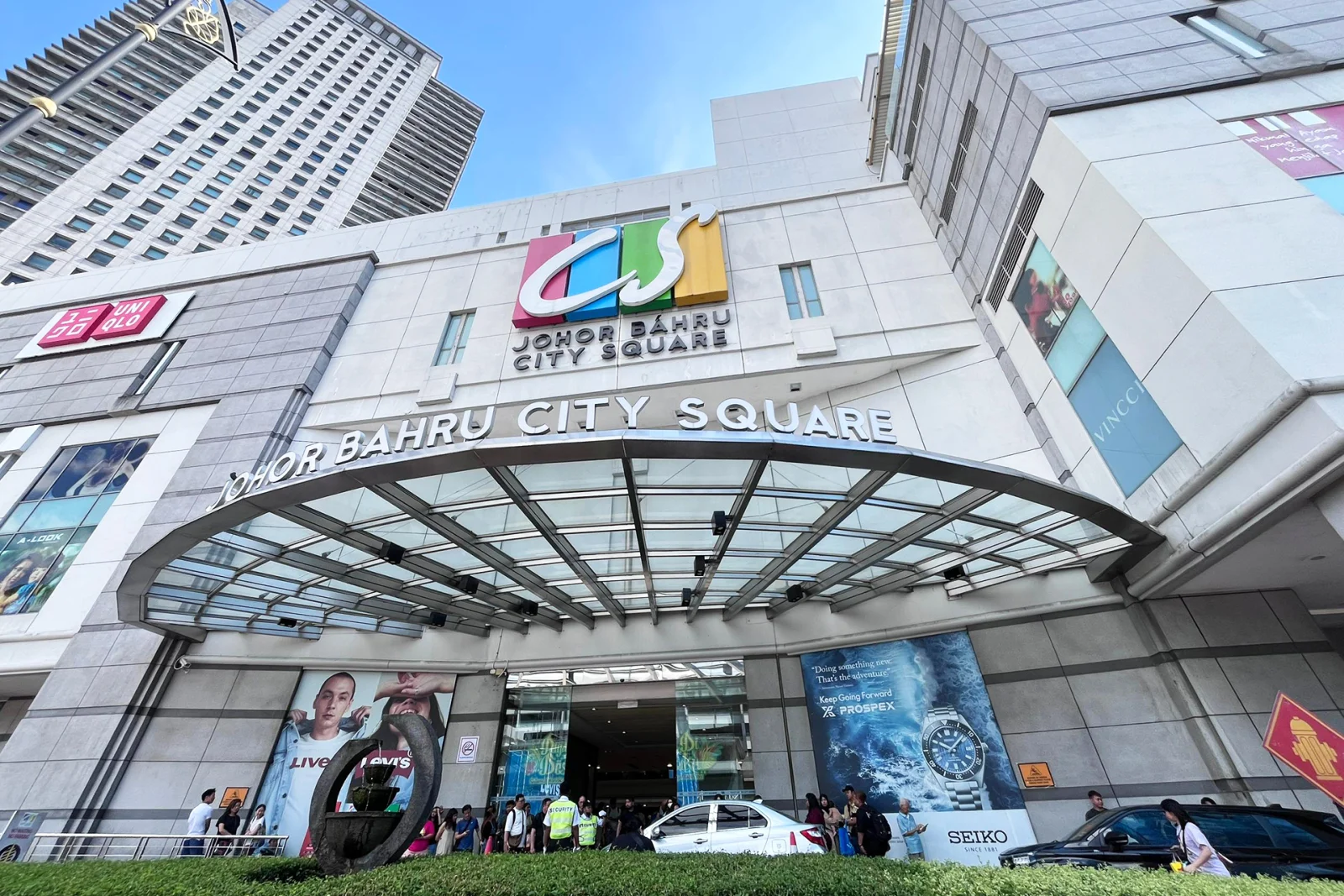

JB Town is the most talked-about property market in Malaysia right now — RTS Link, JS-SEZ, cross-border demand, rental yields. Most of what you read focuses on the upside. What gets less attention are the specific things that trip up buyers who do not read the fine print. Here are three that matter.
1. Leasehold title in a market that rewards freehold
A large proportion of the high-rise condominiums in Johor Bahru Town — particularly those built between 2000 and 2018 — sit on leasehold land. This means the title has a fixed expiry date, typically 99 years from the date of the original land grant. When you buy a 20-year-old leasehold unit today, you are purchasing a property with approximately 79 years remaining on its tenure.
This matters for three reasons:
- Bank financing becomes harder as the lease shortens. Most Malaysian banks will not finance a leasehold property if the remaining tenure falls below 30–40 years at the end of the loan period. A 35-year loan taken on a property with 60 years remaining leaves only 25 years of tenure after loan completion — many banks will decline this or impose a higher deposit requirement.
- Resale becomes progressively more difficult. Buyers become increasingly cautious as leasehold tenure shortens. Properties with fewer than 50 years remaining on the lease have a structurally smaller buyer pool — only cash buyers or those willing to take a short loan tenor.
- The RTS premium is being priced into leasehold stock too. The market excitement around the RTS Link has pushed prices up across JB Town — both freehold and leasehold. But the tenure clock does not stop. A leasehold unit bought today at an RTS premium is a leasehold unit with fewer years remaining in five years’ time.
What to do: Always verify the title before proceeding. Ask your solicitor for the land title search (carian rasmi) and confirm whether it is freehold (pajakan kerajaan tiada / selama-lamanya) or leasehold (pajakan X tahun). Freehold high-rises in JB Town exist — they are not common, but they are findable. R&F Princess Cove and Summer Suites are both freehold, which is part of their value proposition in a market dominated by leasehold stock.
2. RTS pricing: what is already in the price vs. what is still to come
The RTS Link has been announced, confirmed, and is under construction. It is not a rumour — the line is real and the 2027 opening target is credible. But “the RTS is coming” is no longer a secret. That information is already priced into the JB Town market to a significant degree.
Properties within walking distance of Bukit Chagar station — particularly within 500–800 metres of the RTS terminus — have already seen price appreciation that reflects anticipated post-RTS demand. Some units have risen 20–40% in asking price from their pre-announcement levels. This is not unusual for infrastructure-driven markets. The question for buyers today is not “will the RTS happen” but “how much additional upside remains after the RTS opens.”
The honest answer is: no one knows with certainty. What the data shows in comparable infrastructure events (MRT station openings in KL, for example) is that prices tend to peak in anticipation and then consolidate once the infrastructure is operational. The speculative premium comes before opening, not after. Post-opening appreciation, if it occurs, is driven by actual rental demand and actual usage patterns — which take 12–24 months to stabilise after a major new transport link opens.
What to do: If you are buying to hold for 5–10 years, the RTS-adjacent story remains valid as long as the fundamental rental demand materialises (see our population analysis here). If you are buying hoping to flip in 12 months after RTS opens, you are probably already past the optimal window for that trade. Yield-focused buyers should run the numbers on actual rental income rather than banking on capital appreciation.
3. Building management quality — the factor that determines your actual yield
JB Town has a significant number of high-rise condominiums that were built during the 2010–2020 boom — many by developers who have since reduced their Malaysia operations or pivoted their focus. The result is a cohort of buildings where the management corporation (MC) or joint management body (JMB) is underfunded, understaffed, or simply poorly run.
Poor building management manifests in ways that directly affect your rental income and capital value:
- Lifts that break down frequently — tenants leave, or refuse to pay premium rent, for a building where they wait 20 minutes for a working lift
- Swimming pools and gyms that are dirty or out of service — facilities that were listed as selling points become liabilities if not maintained
- Security that is absent or lax — tenant safety concerns that drive move-outs and reduce the quality of tenant you can attract
- Car parks that are poorly managed — illegal parking, damaged barriers, and disputes that create daily friction for residents
- Sinking fund deficits — buildings that have not collected adequate reserves for major repairs (roof, external facade, M&E systems) face sudden large special levies that fall on all owners
This is not a theoretical risk. It is the lived experience in a meaningful proportion of JB Town’s high-rise stock. The buildings that command the highest rental yields and lowest vacancy rates in JB Town are consistently those with the best-run management bodies — regardless of age or developer brand.
What to do: Before signing any SPA (Sale and Purchase Agreement), request the management corporation’s audited accounts for the last two years. Check the sinking fund balance against the total number of units. Visit the building on a weekday morning and a weekend evening — at different times you will see different things. Talk to current tenants or residents in the car park or lobby. Ask your agent to show you the JMB/MC meeting minutes from the last AGM. Buildings that cannot or will not produce this documentation are a warning sign.
A note for foreign buyers specifically
All three issues above apply equally to Malaysian and foreign buyers — but foreign buyers face an additional layer of complexity. For subsale residential property in Johor, the general minimum purchase price for foreign buyers is RM 1 million. However, certain new development projects may have specific foreign-purchase approval at a lower threshold, including selected units from RM 600,000, depending on the project and approved unit. Foreign buyers should verify the eligibility of the exact unit before booking. For a fuller explanation of these below-RM1 million routes, see our guide to buying Johor property below RM1 million as a foreigner.
Foreign buyers who are also MM2H holders should check the property-purchase requirements that apply to their specific MM2H category, as the minimum property value and purchase conditions can differ by category.
For Singaporeans considering JB Town as an investment property with a cross-border tenant pool in mind: the rental income you collect in ringgit will be converted to SGD at whatever the prevailing rate is at remittance. Currency movement between RM and SGD over a 5–10 year hold can meaningfully affect your effective SGD yield. Factor this into your return projections rather than assuming today’s exchange rate holds indefinitely.
The bottom line
JB Town is a genuinely compelling market for the right buyer. The RTS Link is progressing towards passenger service, cross-border commuter demand remains an important part of the JB Town market, and freehold high-rise stock close to the CIQ and RTS station is relatively limited. But the market has enough complexity — leasehold tenure, priced-in infrastructure premiums, and variable building quality — that buyers should still evaluate each project on its own fundamentals.
The three things above are not reasons to avoid JB Town. They are the questions to answer before you commit.