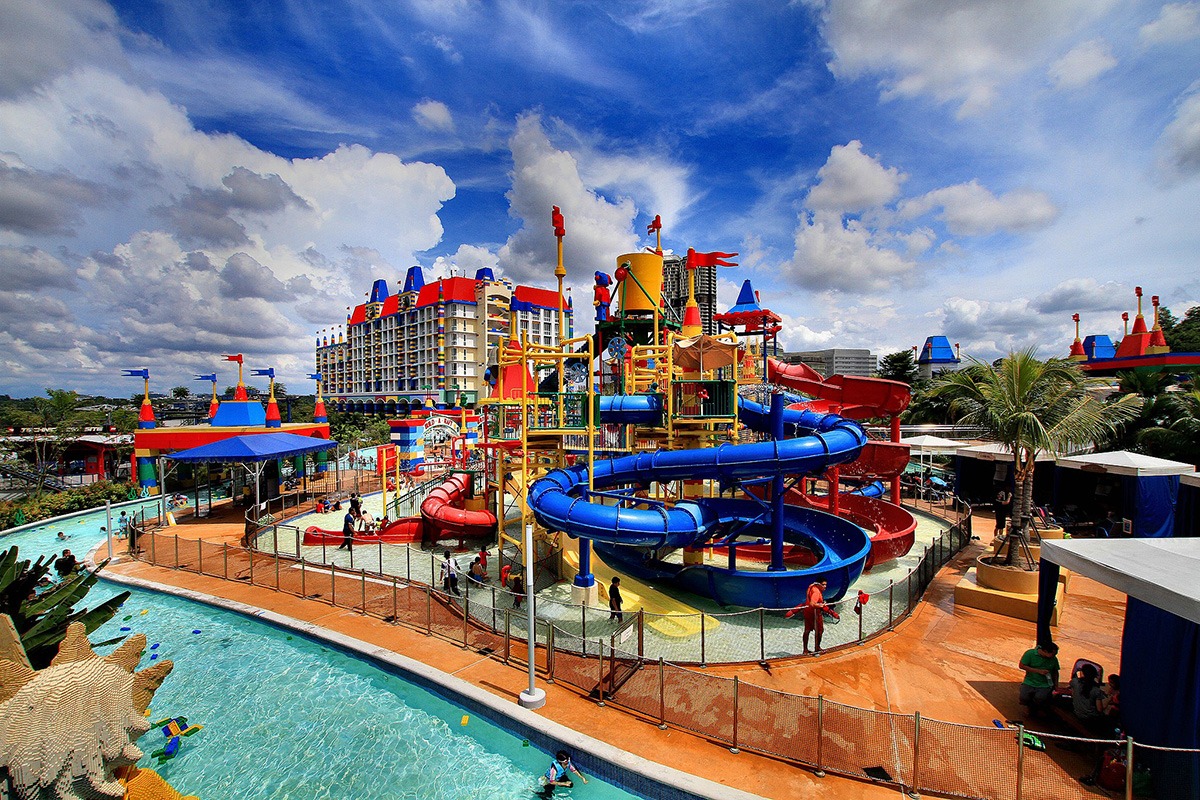

When Medini was launched in the late 2000s, the pitch was simple: a free trade zone inside Iskandar Puteri, with relaxed foreign ownership rules, international anchor tenants, and a purpose-built environment for healthcare, education, and entertainment. Some of that arrived. Some did not. Here is where things actually stand in 2026 — and what the remaining land means for property buyers.
What Medini was supposed to be
Medini Iskandar Malaysia is a 2,230-acre mixed development zone carved out of the broader Iskandar Puteri master plan. It was structured as a Joint Venture between Iskandar Investment Bhd (IIB), Khazanah Nasional, and various Abu Dhabi sovereign wealth entities. The vision was a self-contained urban district combining:
- A world-class hospital (the Gleneagles anchor)
- A theme park and entertainment complex (Legoland)
- Premium office and commercial space for regional headquarters
- Residential high-rises and serviced apartments
- A central park and civic spine connecting the components
Medini also carried a specific policy advantage: no minimum purchase price for foreign buyers on residential properties within the zone. At a time when the rest of Johor required foreigners to buy at RM 500K or above, Medini had no floor. This was a deliberate policy to attract international investment into the zone.
What actually got built
By 2026, the following are operational in Medini:
- Gleneagles Hospital Medini — one of the most modern private hospitals in Johor, fully operational with a wide range of specialist services. A major anchor and genuine healthcare asset for the area.
- Legoland Malaysia Resort — Malaysia’s first international theme park, with a theme park, water park, and hotel. Operating, generating tourism, and providing a family entertainment anchor that nearby residential areas benefit from.
- Medini Mall — a mid-size retail mall serving daily needs for Medini and surrounding residents. Functional, if not a destination.
- Pinewood Iskandar Malaysia Studios — a film studio complex affiliated with the Pinewood brand (James Bond films, Mission Impossible). Operational and active, adding a creative industry employer to the zone.
- Various residential condominiums — several high-rise residential projects were completed in Medini through the 2010s. Occupancy has been mixed; some buildings have seen rental activity from Gleneagles-affiliated medical professionals and Legoland staff.
What did not materialise as planned
The honest assessment is that Medini’s commercial and office component significantly underdelivered relative to its original master plan. The original vision included:
- A large central business district with regional headquarters for multinational corporations — this largely did not arrive
- A convention centre — delayed and subsequently deprioritised
- Multiple additional hotel brands — only Legoland Hotel was completed; other hotel parcels remain undeveloped
- A “knowledge hub” office cluster adjacent to the hospital — partially built but with low occupancy
The primary reason for the shortfall was the same that affected Iskandar Malaysia broadly in the 2014–2018 period: a combination of oil price-driven Malaysian economic slowdown, Chinese developer over-supply in adjacent areas (particularly the early Forest City impact), and a general recalibration of investor expectations after the initial Iskandar hype cycle.
How the JS-SEZ changes the Medini story
The JS-SEZ framework gives Medini a second act. Medini’s existing free trade zone status, its international institutional anchors (Gleneagles, Pinewood), and its undeveloped commercial land parcels now sit inside the JS-SEZ incentive umbrella. Companies attracted to Johor under the JS-SEZ tax incentives may find Medini’s existing infrastructure more attractive than greenfield land elsewhere in Iskandar Puteri.
Specifically, the knowledge economy and healthcare cluster that was originally envisioned around Gleneagles is more plausible today than it was in 2015, because:
- The JS-SEZ personal income tax rate of 15% makes Malaysia more competitive for attracting healthcare professionals and biomedical researchers
- Gleneagles Medini is now established and has built a reputation, making it a credible anchor for adjacent medical offices and specialist clinics
- The post-COVID expansion of medical tourism from Singapore — where hospital costs have risen significantly — has increased patient flows into Johor private hospitals
What this means for property in and around Medini
For buyers considering property in Medini or the surrounding Iskandar Puteri corridor:
- Completed condominiums in Medini offer subsale entry at prices well below their original launch prices in some cases. Units that were sold at RM 600–800K during the Medini peak can be found in the secondary market at RM 400–550K. The hospital proximity creates a specific rental market from medical professionals.
- No minimum purchase price for foreigners still applies in Medini under its original free trade zone designation. Foreign buyers who want to enter the Iskandar Puteri market at a lower price point should confirm with their solicitor whether this remains operative under the current state policy, as the JS-SEZ framework may have modified certain aspects.
- Land parcels remaining in Medini are assets of IIB and represent potential future development sites. Buyers in adjacent areas stand to benefit if those sites are eventually developed as commercial or institutional uses, which would increase the daily working population around their homes.
The balanced view
Medini in 2026 is neither the failed ghost zone its critics painted nor the transformative hub its original promoters promised. It is a partially realised development with genuine institutional anchors, a meaningful if not large residential population, and a realistic second-phase opportunity under the JS-SEZ umbrella. The anchors that are there — Gleneagles, Legoland, Pinewood — are real, operational, and not going anywhere. The upside that was promised but not delivered is now more plausible than it was five years ago, but is not yet confirmed.
For property buyers, Medini represents a calculated position in an area that has underperformed its original thesis but may be entering a more productive phase. It is a different risk-return profile than the established townships of Horizon Hills or Eco Botanic — lower entry price, more uncertainty, more potential upside.